Effective Time Management Techniques for Students and Working Professionals
In today’s fast-paced world, both students and working professionals often struggle to keep up with multiple responsibilities. From deadlines and meetings to exams and personal commitments, managing time effectively has become a critical skill. The good news is that with the right time management techniques, you can take control of your schedule, increase productivity, and reduce stress.
1. Why Time Management Is Important
Time is a limited resource. Once it is gone, it cannot be recovered. Poor time management can lead to missed deadlines, low productivity, and burnout. On the other hand, effective time management helps you:
- Stay organized
- Meet deadlines consistently
- Improve focus and efficiency
- Maintain a healthy work-life balance
Whether you are a student or a professional, mastering this skill can significantly improve your performance and overall well-being.
2. Common Time Management Challenges
Before exploring solutions, it is important to understand common problems:
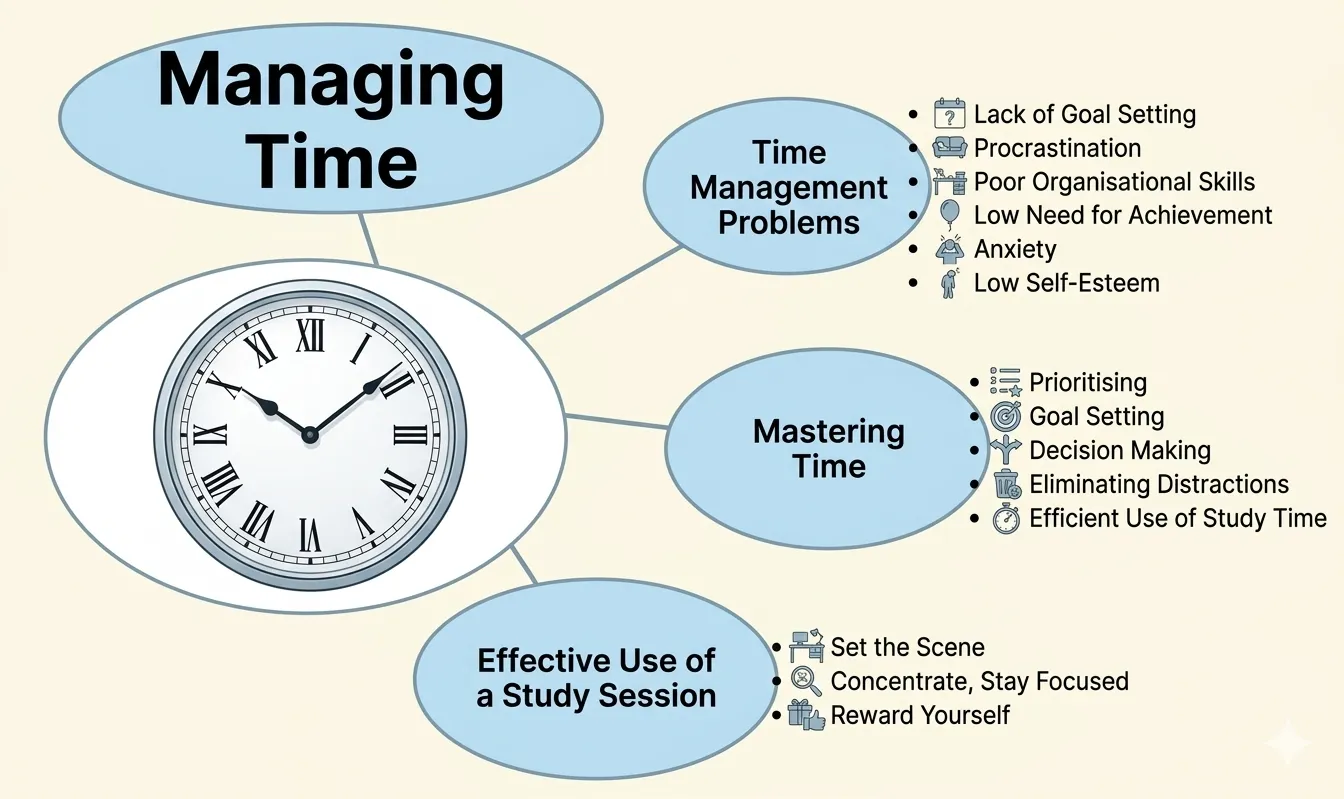
- Procrastination
- Multitasking
- Lack of clear priorities
- Frequent distractions
- Poor planning
Recognizing these challenges is the first step toward overcoming them.
3. Top Time Management Techniques
1. The Pomodoro Technique
This method involves working in focused intervals (25 minutes) followed by short breaks.
Best for: Improving focus and avoiding burnout.
2. Time Blocking
Schedule specific time slots for tasks throughout your day.
Best for: Creating structure and reducing decision fatigue.
3. The Eisenhower Matrix
Prioritize tasks based on urgency and importance.
Best for: Focusing on high-value tasks.
4. The 2-Minute Rule
If a task takes less than 2 minutes, do it immediately.
Best for: Reducing small task buildup.
5. Task Batching
Group similar tasks together and complete them in one session.
Best for: Increasing efficiency and reducing context switching.
4. How Students Can Manage Time Better
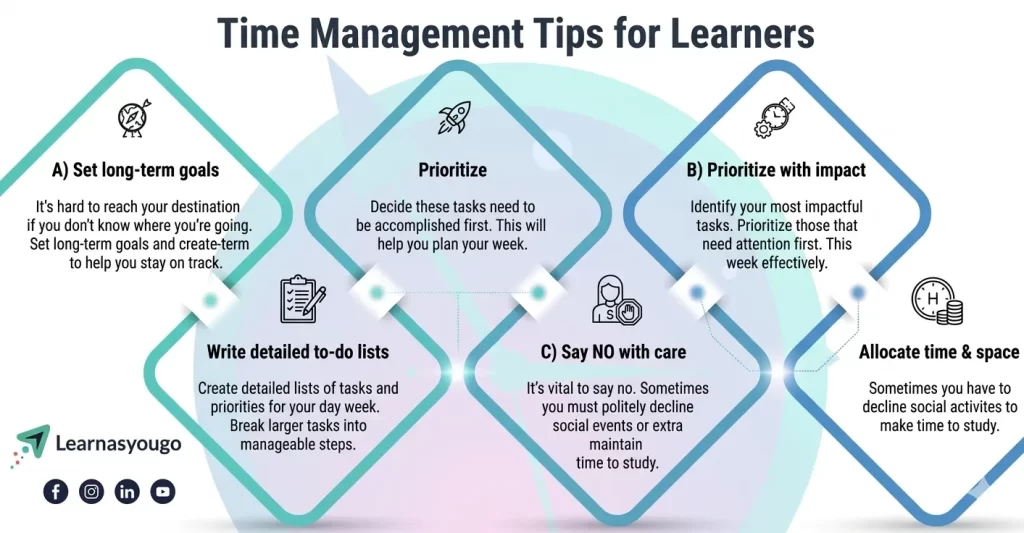
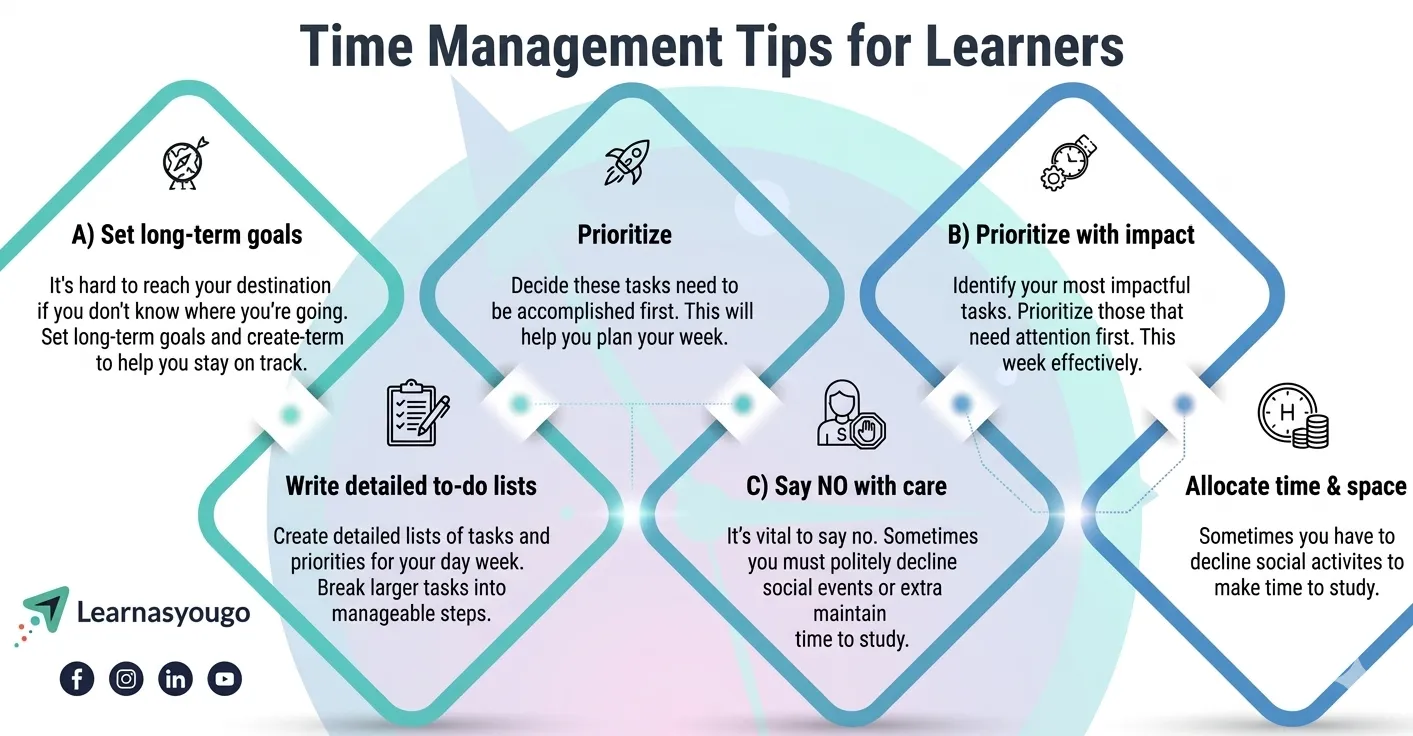
✅ Create a Study Schedule
Time management techniques Plan your study sessions in advance and stick to a routine.
✅ Break Tasks into Smaller Parts
Time management techniques Large assignments can feel overwhelming. Divide them into manageable steps.
✅ Avoid Procrastination
Start early instead of waiting until the last minute.
✅ Use Digital Tools
Apps like calendars and task managers can help you stay organized.
5. How Working Professionals Can Manage Time Better
✅ Prioritize Important Tasks
Focus on tasks that bring the most value.
✅ Limit Meetings
Avoid unnecessary meetings that waste time.
✅ Set Clear Boundaries
Protect your work time from interruptions.
✅ Delegate When Possible
Don’t try to do everything yourself.
6. Practical Tips for Everyon
Plan your day the night before
- Set realistic goals
- Avoid multitasking
- Eliminate distractions
- Take regular breaks
7. Common Mistakes to Avoid
- Overloading your schedule
- Ignoring rest and recovery
- Not setting priorities
- Spending too much time on low-value tasks
- Failing to review your progress
8. Benefits of Effective Time Management
✔ Increased Productivity
You complete tasks faster and more efficiently.
✔ Reduced Stress
Better planning leads to less pressure.
✔ Improved Focus
You can concentrate on one task at a time.
✔ Better Work-Life Balance
You have more time for personal activities.
9. Real-Life Example
A student preparing for exams and a professional handling multiple projects both face time pressure. By using techniques like time blocking and the Pomodoro method, they can organize their schedules, stay focused, and complete tasks more effectively.
10. Conclusion
Effective time management techniques are essential for both students and working professionals. By applying the right strategies—such as prioritization, scheduling, and focus techniques—you can take control of your time and achieve your goals more efficiently.
Remember, it’s not about working harder, but working smarter. Start applying these techniques today, and you will see a significant improvement in your productivity and quality of life.