What Are Communication Skills? How to Improve Your Communication Every Day
Introduction
In today’s fast-paced world, communication skills are more important than ever. Whether you’re a student, professional, or entrepreneur, the ability to express ideas clearly and understand others effectively can determine your success.
But what exactly are communication skills, and how can you improve them every day? Let’s explore.
1. What Are Communication Skills?
Communication skills refer to the ability to convey information, thoughts, and emotions effectively through various methods, including:
- Verbal communication (speaking)
- Non-verbal communication (body language, facial expressions)
- Written communication (emails, messages, reports)
- Listening skills (active listening and understanding)
Good communication is not just about talking—it’s about ensuring your message is understood as intended.
2. Why Are Communication Skills Important?
Strong communication skills help you:
- Build better relationships
- Increase workplace productivity
- Avoid misunderstandings
- Boost confidence
- Improve teamwork and collaboration
In both personal and professional life, effective communication is a key driver of success.
3. Types of Communication Skills
There are several main types of communication skills. Verbal communication involves speaking clearly and effectively in conversations, presentations, or discussions. Non-verbal communication includes body language, facial expressions, eye contact, and gestures, which often convey more than words. Written communication refers to expressing ideas through emails, messages, or documents in a clear and organized way. Listening skills are also essential, as active listening helps you understand others and respond appropriately. Together, these skills create effective and meaningful communication in daily life and work.
1. Verbal Communication
This includes how clearly and confidently you speak. Tone, pace, and word choice all matter.
2. Non-Verbal Communication
Your body language, eye contact, and gestures often speak louder than words.
3. Listening Skills
Active listening means fully focusing, understanding, and responding thoughtfully.
4. Written Communication
Clear and concise writing is essential in emails, reports, and online communication.
4. How to Improve Your Communication Every Day
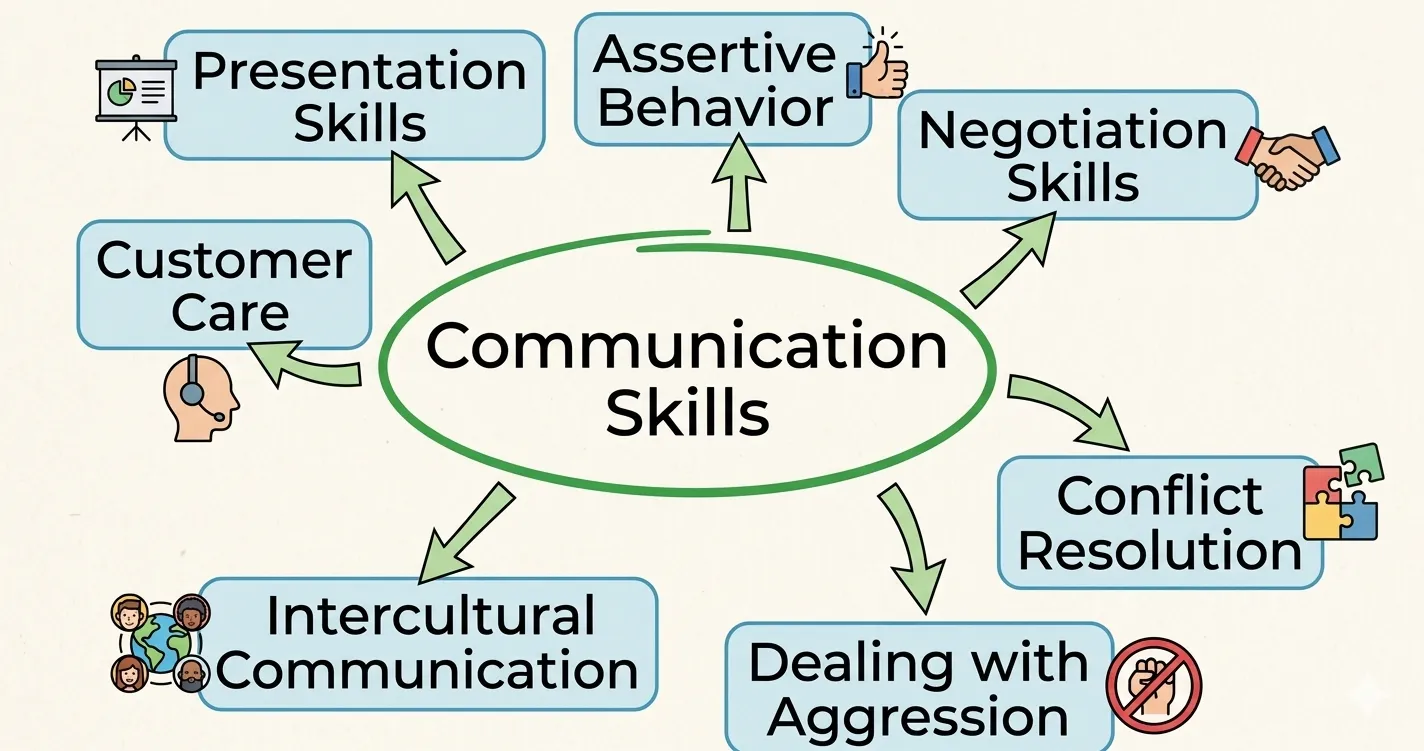
Improving communication is a daily practice. Here are practical tips you can start using immediately:
1. Practice Active Listening
- Focus on the speaker
- Avoid interrupting
- Ask clarifying questions
2. Expand Your Vocabulary
- Learn new words daily
- Read books, articles, or blogs
- Practice using new words in conversations
3. Improve Your Body Language
- Maintain eye contact
- Use open and confident posture
- Avoid distracting gestures
4. Speak Clearly and Concisely
- Avoid overcomplicating your message
- Get straight to the point
- Organize your thoughts before speaking
5. Practice Writing Every Day
- Write short emails or journal entries
- Focus on clarity and structure
- Review and edit your writing
6. Ask for Feedback
- communication skills Get input from friends, colleagues, or mentors
- Learn from constructive criticism
7. Control Your Emotions
- Stay calm during conversations
- Think before you speak
- Avoid reacting impulsively
8. Practice Daily Conversations
- Talk to new people
- Join discussions or group activities
- Practice speaking in front of a mirror
5. Common Communication Mistakes to Avoid
- Interrupting others
- Not listening actively
- Using unclear or vague language
- Ignoring body language
- Overusing jargon or complex words
6. Conclusion
Communication skills are essential for success in every aspect of life. The good news is that they can be improved with consistent daily practice.
Start small—listen better, speak clearly, and stay aware of how you communicate. Over time, these habits will transform the way you connect with others.