Problem-Solving and Decision-Making Skills: A Complete Guide
In today’s fast-changing world, problem-solving and decision-making skills are essential for both personal and professional success. Every day, we face challenges that require us to think critically, analyze situations, and make effective decisions.
Whether you are a student, employee, or leader, developing these skills will help you handle difficulties with confidence and achieve better outcomes.
1. What Are Problem-Solving and Decision-Making Skills?
Problem-solving skills refer to the ability to identify issues, analyze causes, and find effective solutions. Meanwhile, decision-making skills involve choosing the best course of action from different options.
Together, these skills enable individuals to respond quickly and effectively to challenges.
2. Why Are These Skills Important?
2.1. Improve Efficiency
Quick and effective decisions save time and resources.
2.2. Reduce Stress
Having a clear approach to solving problems helps you stay calm under pressure.
2.3. Enhance Critical Thinking
You learn to evaluate situations logically and make informed choices.
2.4. Boost Career Growth
Employers value individuals who can solve problems independently and make smart decisions.
3. Key Problem-Solving and Decision-Making Skills
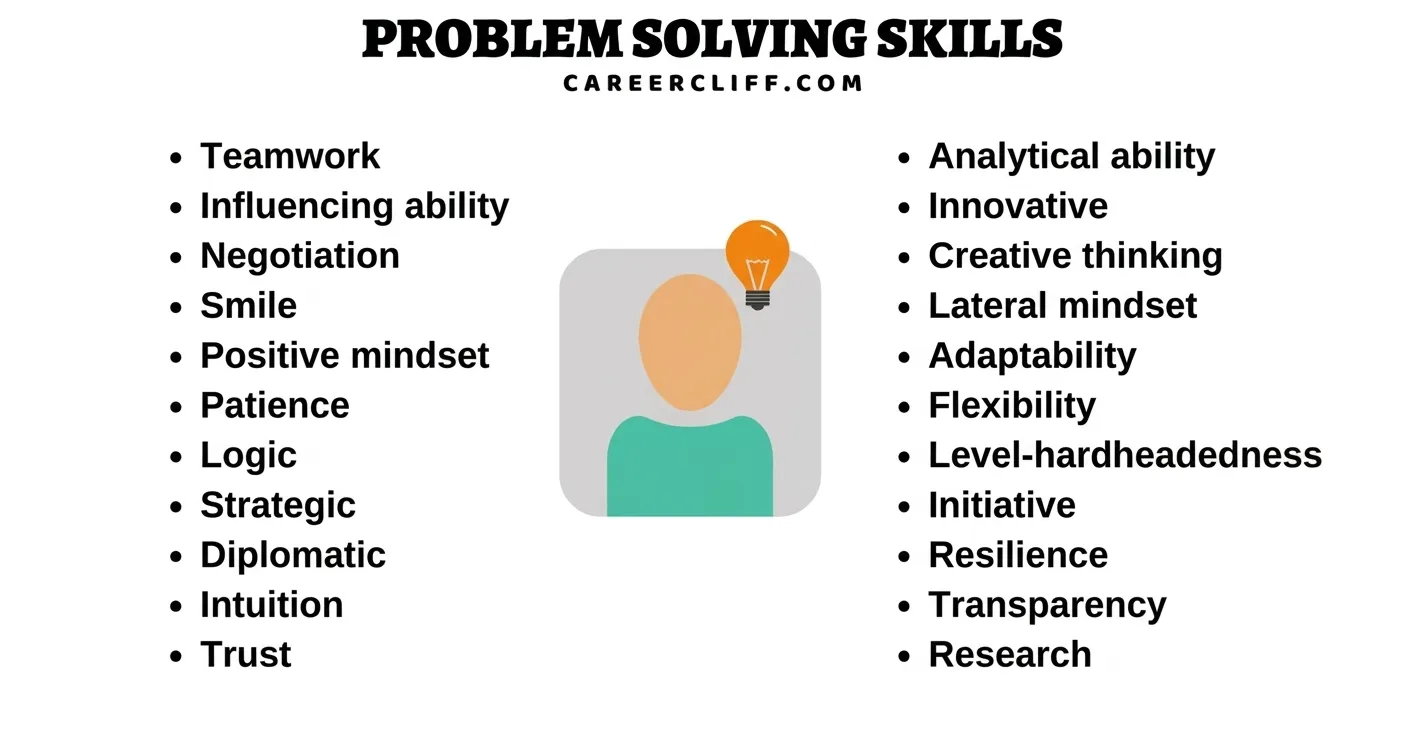
Key problem-solving and decision-making skills include critical thinking, analytical ability, and creativity to identify and evaluate solutions. You should also develop the ability to assess risks, consider different perspectives, and make informed choices. Additionally, time management and adaptability help you respond effectively to challenges and make better decisions under pressure.
3.1. Critical Thinking
Analyzing information objectively helps you understand problems clearly.
3.2. Analytical Skills
Breaking down complex issues into smaller parts makes them easier to solve.
3.3. Creativity
Thinking outside the box allows you to find innovative solutions.
3.4. Decision-Making Ability
Choosing the best option based on available information is crucial.
3.5. Emotional Intelligence
Managing emotions helps you make balanced and rational decisions.
3.6. Risk Assessment
Evaluating potential risks helps you avoid negative outcomes.
4. Steps to Improve Problem-Solving and Decision-Making Skills
To improve these skills, start by clearly defining the problem and gathering relevant information. Analyze possible solutions, compare their advantages and risks, and choose the most effective option. After taking action, review the results, learn from experience, and continuously refine your approach to make better decisions in the future.
4.1. Identify the Problem Clearly
Understand the root cause instead of just symptoms.
4.2. Gather Information
Collect relevant data and insights before making decisions.
4.3. Analyze Possible Solutions
Compare different options and their outcomes.
4.4. Make a Decision
Choose the best solution based on logic and evidence.
4.5. Evaluate Results
Review the outcome and learn from experience.
5. Practical Tips for Better Decision-Making
To make better decisions, gather enough information but avoid overthinking or delaying action. Weigh the pros and cons of each option, consider possible outcomes, and trust your judgment. Learn from past experiences, stay objective, and be ready to adjust your decisions when new information arises.
- Avoid rushing decisions without enough information
- Consider both short-term and long-term impacts
- Stay objective and avoid emotional bias
- Learn from past mistakes
- Seek advice when necessary
6. Common Mistakes to Avoid
- Ignoring important information
- Letting emotions control decisions
- Overthinking and delaying action
- Avoiding responsibility
- Not evaluating results after decisions
7. Conclusion
Developing strong problem-solving and decision-making skills is essential for achieving success in both work and life. These skills help you handle challenges effectively, make better choices, and improve overall performance. By practicing regularly and learning from experience, you can become more confident and capable in any situation.