Self-Discipline: The Foundation of Success and Personal Growth
In today’s world full of distractions, self-discipline is one of the most valuable skills you can develop. It is the ability to control your actions, stay focused on your goals, and remain consistent even when motivation fades.
While motivation can come and go, self-discipline ensures that you continue moving forward. It is the key factor that separates successful individuals from those who struggle to achieve their goals.
1. What Is Self-Discipline?
Self-discipline is the ability to regulate your behavior, emotions, and thoughts in pursuit of long-term goals. It involves doing what needs to be done, even when you don’t feel like doing it.
Unlike talent or intelligence, is a skill that can be developed over time through practice and consistency. It plays an essential role in productivity, personal development, and success.
2. Why Is Self-Discipline Important?
Self-discipline is important because it helps you stay focused, control your actions, and achieve your goals. It allows you to build good habits, manage time effectively, and overcome distractions or challenges. With strong , you can stay consistent, improve your performance, and achieve long-term success.
2.1. Helps You Achieve Goals
Self-discipline keeps you focused and committed to your objectives.
2.2. Builds Strong Habits
Consistent actions lead to positive habits that support long-term success.
2.3. Improves Time Management
You learn how to prioritize tasks and avoid distractions.
2.4. Increases Productivity
Discipline helps you stay efficient and complete tasks effectively.
2.5. Strengthens Mental Toughness
It trains your mind to overcome challenges and resist temptations.
3. Key Elements of Self-Discipline
Key elements of include self-control, consistency, and strong goal commitment. You should also develop time management, focus, and the ability to delay gratification. These elements help you stay on track, build positive habits, and achieve long-term success.
3.1. Clear Goals
Having specific goals gives you direction and purpose.
3.2. Consistency
Taking small actions every day is more important than occasional effort.
3.3. Focus
Eliminating distractions helps you stay on track.
3.4. Willpower
The ability to resist short-term temptations for long-term benefits.
3.5. Responsibility
Taking ownership of your actions and decisions.
4. How to Build Self-Discipline
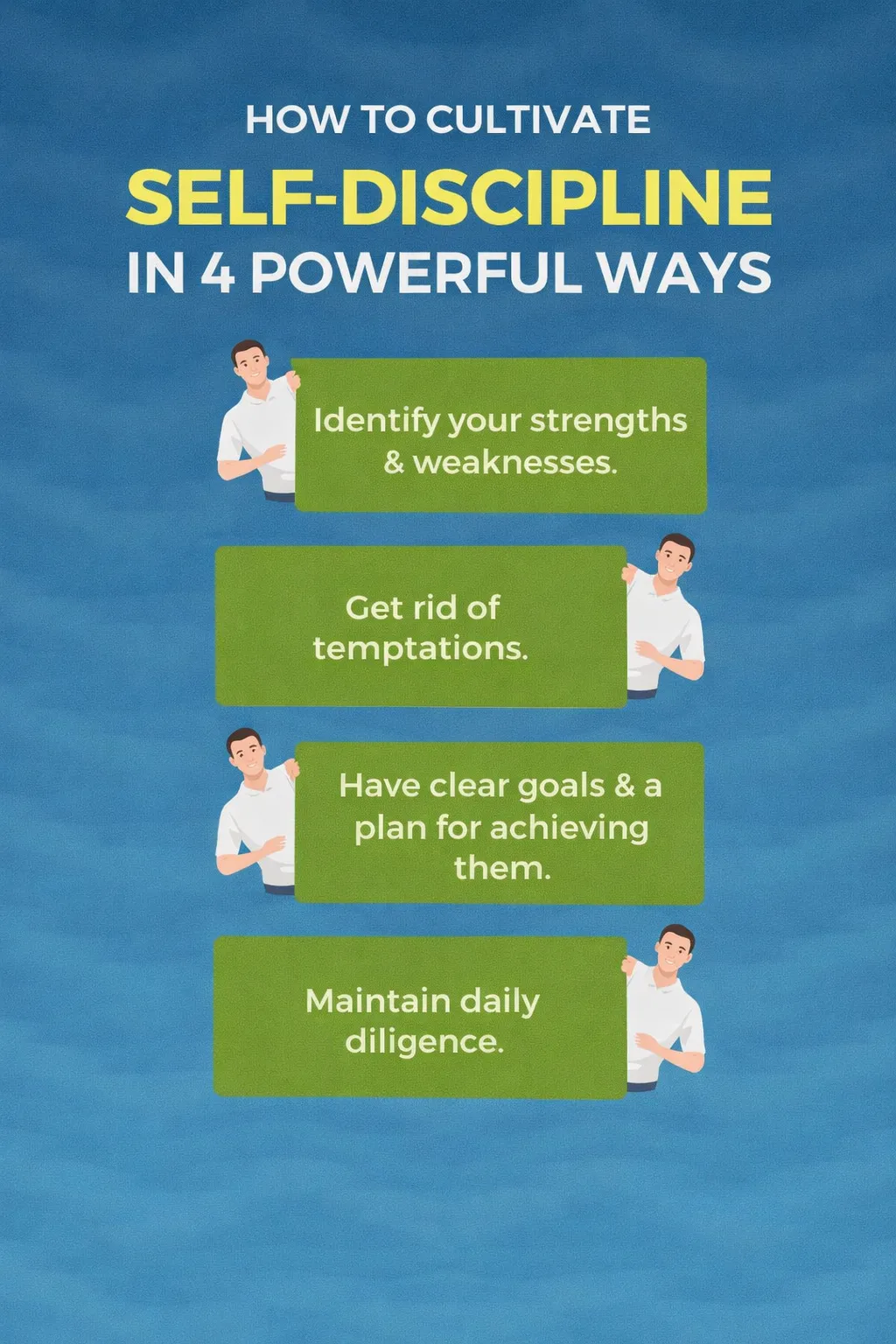
To build start by setting clear and realistic goals, then break them into small, manageable tasks. Create a routine, stay consistent, and eliminate distractions that may affect your focus. Practice self-control, stay committed to your plans, and gradually develop positive habits that support long-term success.
4.1. Start with Small Habits
Begin with simple tasks like waking up early or exercising daily.
4.2. Set Clear and Realistic Goals
Break large goals into smaller, manageable steps.
4.3. Create a Daily Routine
A structured schedule helps you stay consistent and productive.
4.4. Remove Distractions
Limit social media, unnecessary notifications, and time-wasting activities.
4.5. Stay Accountable
Track your progress and hold yourself responsible for your actions.
5. Practical Tips to Strengthen Self-Discipline
- Follow a consistent daily routine
- Prioritize important tasks first
- Reward yourself for achievements
- Stay focused on long-term benefits
- Practice saying “no” to distractions
- Keep a habit tracker or journal
6. Common Mistakes to Avoid
- Relying only on motivation
- Setting unrealistic goals
- Giving up too quickly
- Lack of consistency
- Not tracking progress
7. How Self-Discipline Impacts Your Life
Self-discipline affects every aspect of your life—from career success to personal relationships. In the workplace, it helps you meet deadlines, stay organized, and perform better. In your personal life, it helps you maintain healthy habits, manage time effectively, and achieve balance.
People with strong are often more confident, reliable, and successful because they can control their actions and stay committed to their goals.
8. Conclusion
Building strong self-discipline is essential for achieving long-term success and personal growth. It allows you to stay focused, develop positive habits, and overcome challenges effectively.
Remember, is not about perfection—it’s about consistency. By taking small steps every day and staying committed to your goals, you can develop the discipline needed to create a successful and fulfilling life.