The Pomodoro Method: Secrets to Focus and Time Management
In an era filled with constant distractions—social media, emails, and endless notifications—maintaining focus has become one of the biggest challenges for students, professionals, and entrepreneurs alike. Many people try to work for hours without breaks, only to find themselves tired, distracted, and less productive.
One of the most effective solutions to this problem is the Pomodoro Method, a simple yet powerful time management technique designed to improve focus, productivity, and mental energy.
This article explores how the Pomodoro Method works, why it is effective, and how you can use it to maximize your productivity.
1. What Is the Pomodoro Method?
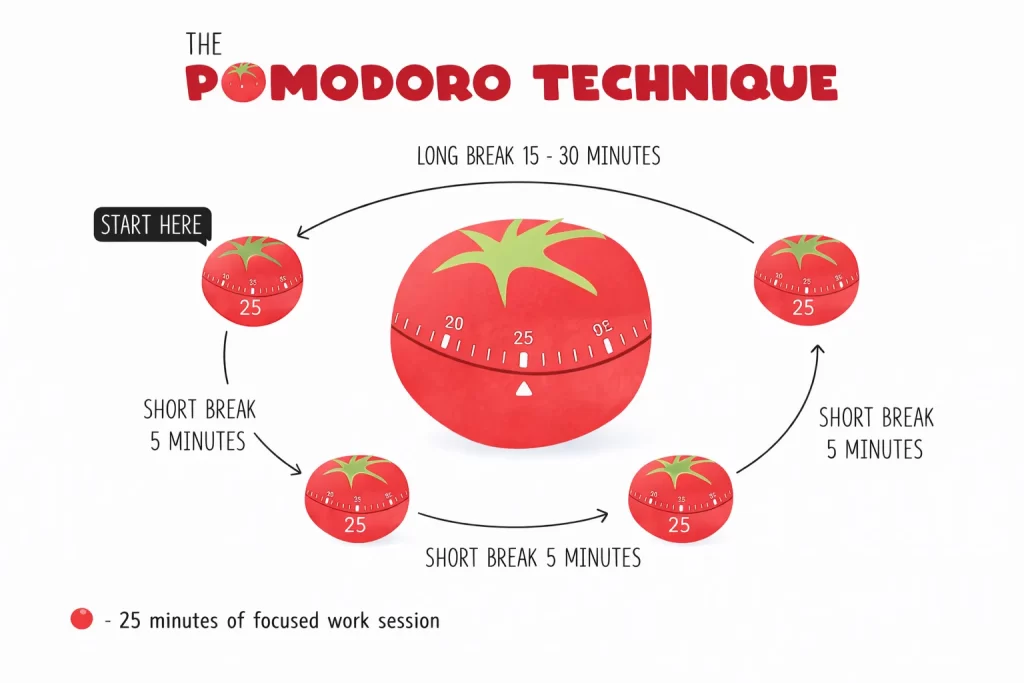
The Pomodoro Method is a time management technique created by Francesco Cirillo in the late 1980s. The name “Pomodoro,” which means tomato in Italian, comes from the tomato-shaped kitchen timer Cirillo used while studying.
The technique divides work into short, focused intervals called Pomodoros, followed by brief breaks.
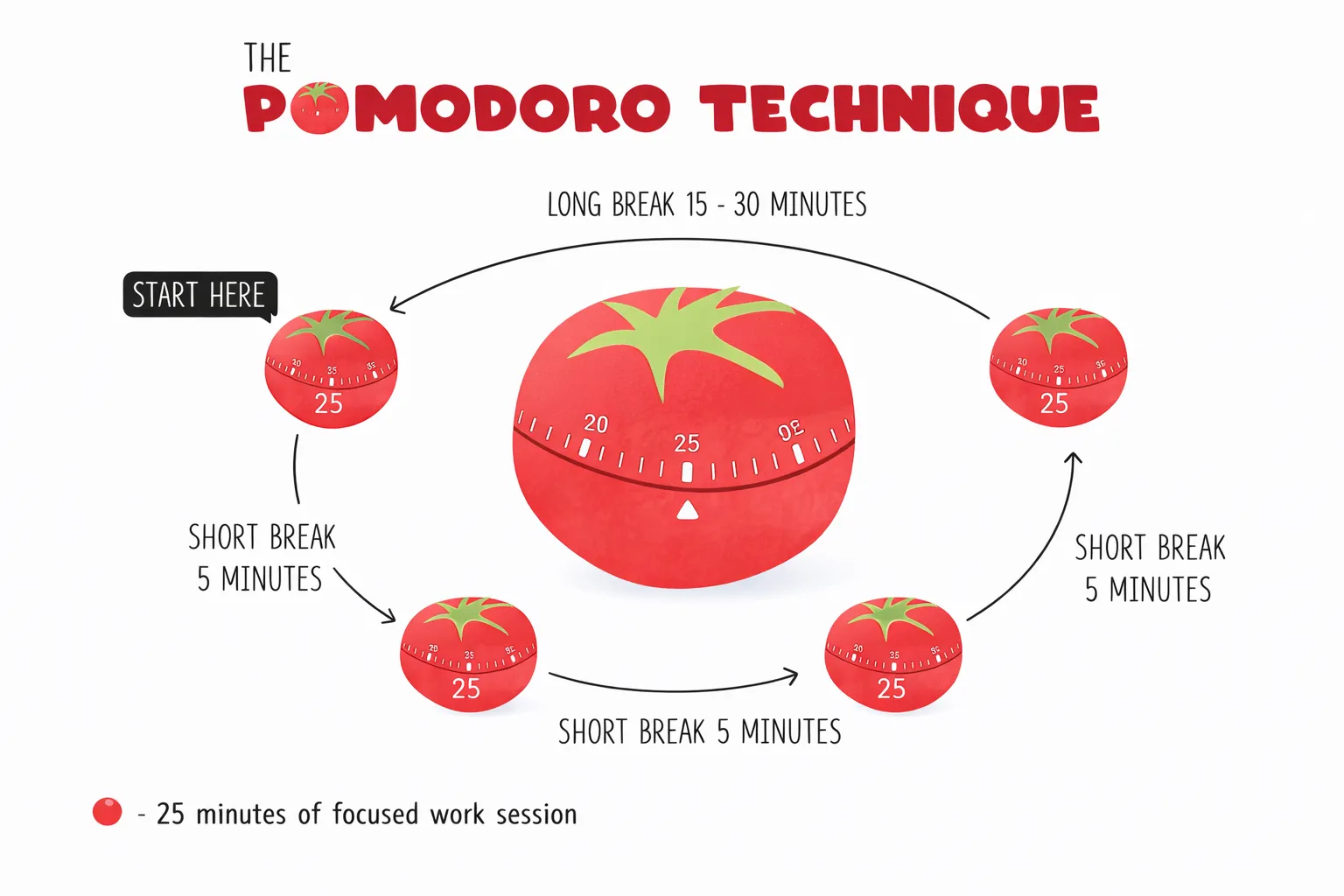
A standard Pomodoro cycle includes:
- 25 minutes of focused work
- 5 minutes of break
- Repeat the cycle four times
- After four Pomodoros, take a long break of 15–30 minutes
This structure helps the brain stay energized while maintaining deep concentration.
2. Why the Pomodoro Method Works
1. Encourages Deep Focus
Many people lose concentration because they try to multitask or work for too long without breaks. The Pomodoro Method encourages single-task focus for a short period of time, making it easier to maintain attention.
Knowing that you only need to concentrate for 25 minutes makes the task feel manageable.
2. Reduces Procrastination
Procrastination often happens when tasks feel overwhelming. Breaking work into small, timed sessions makes it easier to start.
Instead of thinking:
“I need to work on this project all day.”
You think:
“I just need to complete one Pomodoro.”
This small psychological shift can dramatically increase productivity.
3. Prevents Mental Fatigue
Working continuously for long hours can exhaust the brain. Regular breaks allow your mind to recover, improving overall efficiency.
Short breaks can help you:
- Refresh your mind
- Improve creativity
- Reduce stress
- Maintain energy levels throughout the day
4. Improves Time Awareness
The Pomodoro Method helps you understand how long tasks actually take. Over time, you will become better at estimating your workload and planning your schedule.
For example:
- Writing a report: 3–4 Pomodoros
- Studying a chapter: 2 Pomodoros
- Responding to emails: 1 Pomodoro
This awareness leads to better time management.
3. How to Use the Pomodoro Method
Using the Pomodoro Method is very simple and requires only a timer.
Step 1: Choose One Task
Select a task you want to focus on, such as studying, writing, coding, or planning.
Step 2: Set a Timer for 25 Minutes
Start a 25-minute timer and work with full concentration until the timer rings.
During this time:
- Avoid checking your phone
- Ignore emails or messages
- Focus entirely on the task
Step 3: Take a 5-Minute Break
When the timer ends, take a short break. Stand up, stretch, walk around, or relax your mind.
Avoid activities that might lead to long distractions, such as scrolling social media.
Step 4: Repeat the Process
After completing four Pomodoro sessions, take a longer break of 15 to 30 minutes to fully recharge.
4. Tips to Make the Pomodoro Method More Effective
1. Remove Distractions
Before starting a Pomodoro session:
- Turn off notifications
- Close unnecessary tabs
- Put your phone away
A distraction-free environment dramatically improves focus.
2. Plan Your Pomodoros
At the start of the day, decide how many Pomodoros each task will require.
Example:
- Study English – 3 Pomodoros
- Write blog article – 4 Pomodoros
- Check emails – 1 Pomodoro
Planning your sessions helps you manage time more effectively.
3. Track Your Progress
Tracking Pomodoros helps you measure productivity and stay motivated.
You can track them using:
- Productivity apps
- A notebook
- A simple checklist
Seeing your progress builds momentum.
4. Customize the Time Intervals
While the classic Pomodoro uses 25-minute sessions, you can adjust the time if needed.
Some people prefer:
- 40 minutes work + 10 minutes break
- 50 minutes work + 10 minutes break
Experiment to find the rhythm that works best for you.
5. Who Can Benefit from the Pomodoro Method?
The Pomodoro Method is useful for almost anyone who needs better focus and productivity.
It is especially helpful for:
- Students studying for exams
- Writers creating content
- Developers working on coding projects
- Remote workers managing tasks at home
- Entrepreneurs organizing daily workloads
6. Final Thoughts
The Pomodoro Method proves that productivity is not about working longer—it’s about working smarter. By dividing your time into focused intervals and allowing regular breaks, you can improve concentration, reduce procrastination, and maintain high levels of productivity.
If you struggle with focus or time management, try the Pomodoro Method today. Even starting with just a few sessions can significantly improve how you work and manage your time.